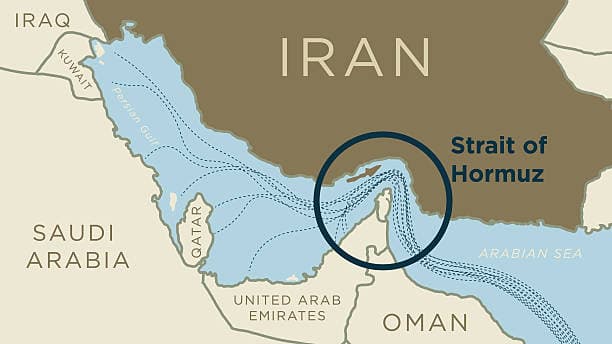

For much of 2026, war risk insurance became one of the largest unexpected cost items in global chemical logistics.
At the peak of the Hormuz crisis, vessel owners, charterers and cargo interests faced rapidly rising insurance premiums as underwriters responded to escalating security concerns. For many chemical importers and exporters, war risk surcharges became almost as important as freight rates themselves.
Now, a significant development is beginning to reshape the insurance landscape.
The establishment of a formal US-Iran de-confliction communication channel represents the first structured mechanism for preventing maritime incidents since the crisis began. While the Strait of Hormuz remains a higher-risk operating environment than before February, underwriters now have a new factor to incorporate into their risk calculations.
The result could be the beginning of a gradual repricing of war risk exposure.
Why War Risk Insurance Matters
Marine insurance normally covers operational shipping risks such as:
Collision
Grounding
Cargo damage
Mechanical failure
War risk insurance covers a different category of threats.
These include:
Military conflict
Terrorism
Mines
Seizure
Political violence
Hostile acts
Because the Hormuz crisis involved several of these factors simultaneously, war risk premiums increased dramatically during the first half of 2026.
For chemical cargoes, these additional costs often flowed directly into landed product pricing.
What Changed at Bürgenstock?
The most important outcome for shipping was not a commercial agreement but a communication framework.
The newly established de-confliction channel creates:
Direct communication capability
Incident prevention mechanisms
Faster clarification of maritime events
Reduced risk of miscalculation
From an insurance perspective, this matters because many losses occur not from deliberate escalation but from misunderstanding and operational confusion.
Reducing that uncertainty improves the risk profile of the shipping corridor.
Underwriters Focus on Evidence, Not Headlines
Marine insurers rarely reduce premiums based solely on political announcements.
Instead, they evaluate measurable indicators.
These include:
Vessel Transit Volumes
Higher traffic indicates growing industry confidence.
AIS Shipping Data
Actual vessel movements provide objective evidence.
Incident Frequency
The absence of major events supports premium reductions.
Naval Security Measures
Additional protection improves risk assessments.
Mine Clearance Progress
A critical factor for long-term normalization.
The de-confliction channel becomes meaningful only when combined with these operational indicators.

Why Record Transit Volumes Matter
One of the strongest signals currently influencing underwriters is vessel activity.
High transit volumes demonstrate that:
Shipowners are willing to operate in the region.
Charterers are booking cargoes.
Insurers are providing coverage.
Risk assessments are gradually improving.
From an underwriting perspective, actual vessel movement often carries more weight than political statements.
Shipping behavior reveals how market participants truly perceive risk.
Denmark's Participation Adds Credibility
The expansion of multinational maritime support provides another positive factor.
Additional coalition participation contributes to:
Enhanced surveillance
Greater operational coverage
Improved response capability
Stronger deterrence
Insurance markets generally view broader international cooperation as a stabilizing influence.
This does not eliminate risk but can support more favorable underwriting assumptions.
The Mine Problem Has Not Gone Away
Despite these positive developments, one major obstacle remains.
Mine clearance continues to be the single most important factor preventing a full normalization of insurance pricing.
Maritime mines create unique underwriting challenges because:
Detection is difficult.
Consequences can be severe.
Clearance takes time.
Risk persists even after conflict subsides.
For insurers, unresolved mine threats continue to justify elevated premiums.
Different Routes Mean Different Risk Profiles
Not all Hormuz transits are viewed equally.
Underwriters increasingly differentiate between routes based on:
Omani Coastal Route
Generally viewed as lower risk under current conditions.
Southern Shipping Lane
Showing improving operational confidence.
Central Deep-Water Channel
Still associated with elevated risk due to mine concerns.
As a result, premium calculations may vary depending on planned routing.
This route-specific underwriting approach is becoming increasingly important for chemical cargo operators.
What Chemical Shippers Should Do Now
The evolving insurance environment creates opportunities for proactive management.
Contact Insurance Brokers
Request updated premium guidance.
Review Voyage Routing
Understand how routing affects coverage costs.
Verify Policy Conditions
Ensure coverage aligns with actual transit plans.
Monitor Underwriting Updates
War risk pricing can change weekly.
Update Landed Cost Models
Potential premium reductions may influence procurement economics.
Companies that engage early with insurers may identify cost-saving opportunities before competitors.
Will Premiums Fall Immediately?
Probably not.
Insurance markets typically move more slowly than freight markets.
Underwriters will want to see:
Sustained transit volumes
Continued operational stability
Progress on mine clearance
Successful functioning of the de-confliction channel
Only after these indicators persist over time are significant premium reductions likely to occur.
The process is evolutionary rather than instantaneous.
Implications for Chemical Buyers
For chemical importers and exporters, insurance remains an important component of total logistics cost.
Products particularly exposed include:
Methanol
Polyethylene
Polypropylene
Ammonia
Urea
Aromatics
Industrial solvents
Even modest reductions in insurance costs can improve delivered economics for high-volume commodity cargoes.
Consequently, procurement teams should closely monitor developments.
What to Watch Over the Next Month
Several indicators will determine whether premium reductions accelerate.
Weekly Underwriting Reviews
Insurers reassess conditions continuously.
Mine Clearance Progress
Perhaps the single most important variable.
Vessel Traffic Levels
Higher utilization supports confidence.
Security Incident Reports
The absence of incidents strengthens the normalization case.
Coalition Operations
Expanded maritime cooperation may further improve risk assessments.
These factors will shape insurance pricing through Q3 2026.
Methanol CAS: 67-56-1