Why Sustainability Matters in Chemical Procurement
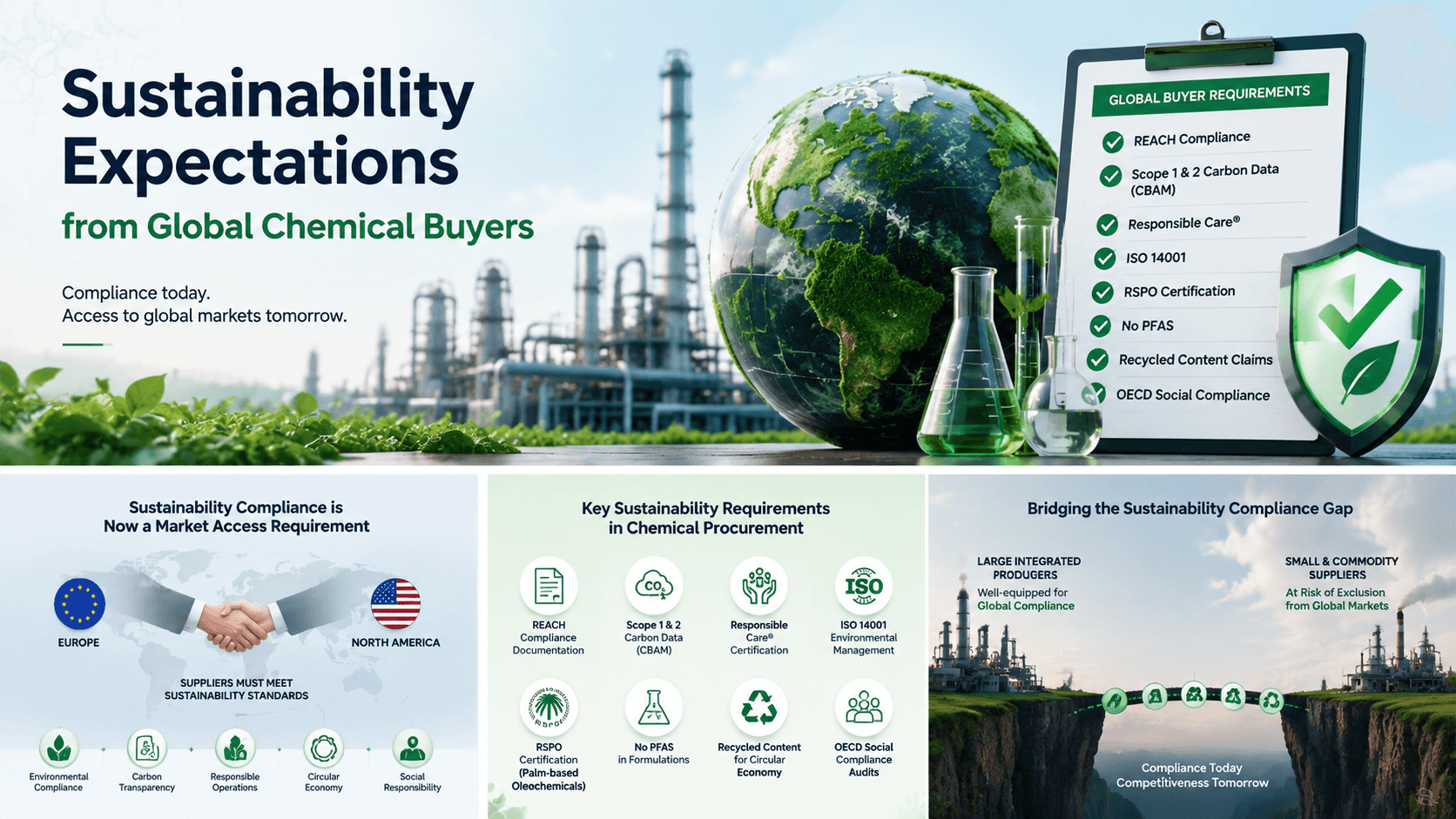
The shift toward sustainability in the chemical industry is no longer optional. Global buyers in Europe and the United States are actively incorporating ESG criteria into every contract. Their procurement teams are looking beyond price and quality to verify that suppliers meet a growing list of environmental and social standards. This trend is driven by regulatory pressure, consumer demand, and the need to future‑proof supply chains.
Key Sustainability Requirements in Modern Contracts
Below is a snapshot of the most common sustainability clauses buyers now demand:
- REACH Compliance Documentation – Proof that all chemicals meet European Union registration, evaluation, authorization, and restriction standards.
- Verified Scope 1 & 2 Carbon Footprint – Accurate data for CBAM (Carbon Border Adjustment Mechanism) certification.
- Responsible Care Certification – Demonstrated commitment to health, safety, and environmental performance.
- ISO 14001 Environmental Management System – Evidence of an established EMS framework.
- RSPO Certification – For palm‑based oleochemicals, ensuring responsible sourcing.
- No PFAS in Formulations – Compliance with EU and US state regulations.
- Recycled Content Claims – Transparent data supporting circular economy initiatives.
- OECD Social Compliance Audits – Verification of labor standards and human rights practices.
The Sustainability Compliance Gap
Large integrated producers often have the infrastructure to generate the required documentation and maintain certifications. In contrast, many commodity suppliers in India and China lack the resources or expertise to comply with these multi‑layered requirements. As a result, they face exclusion from key procurement processes, creating a widening gap in the global supply chain.
Drivers of the Gap
- Limited access to certification bodies and audit services.
- Higher upfront costs for data collection and reporting.
- Lack of local regulatory frameworks aligned with EU/US standards.
Strategies for Suppliers to Bridge the Gap
Adopting a proactive approach can help suppliers meet buyer expectations and secure market access.
1. Build a Dedicated Sustainability Team
Hire or train personnel focused on ESG data collection, reporting, and certification management. This team becomes the single point of contact for all compliance activities.
2. Leverage Digital Platforms
Implement cloud‑based ESG platforms that automate data capture, calculate carbon footprints, and generate compliance reports. Integration with ERP systems reduces manual effort.
3. Partner with Certification Bodies
Establish relationships with regional audit firms that can conduct ISO 14001, Responsible Care, and RSPO audits. Many certification bodies offer bundled services for small and medium enterprises.
4. Invest in Training and Capacity Building
Workshops on REACH registration, PFAS mitigation, and circular economy practices empower staff and ensure long‑term compliance.
5. Engage in Collaborative Supply‑Chain Initiatives
Join industry consortia or trade associations that share best practices and provide collective bargaining power for certification fees.
Benefits of Adopting Sustainable Practices
Beyond meeting buyer requirements, suppliers reap several strategic advantages:
- Market Access – Eligibility for contracts in the EU, US, and other premium markets.
- Risk Mitigation – Reduced exposure to regulatory fines and supply chain disruptions.
- Brand Value – Enhanced reputation among ESG‑conscious customers and investors.
Conclusion
Global chemical buyers are reshaping procurement with sustainability at the core. While the compliance gap presents challenges, it also offers a clear pathway for suppliers to modernize operations, reduce environmental impact, and unlock new business opportunities. By investing in ESG capabilities today, Indian and Chinese suppliers can secure a competitive edge in tomorrow’s green chemical supply chains.