
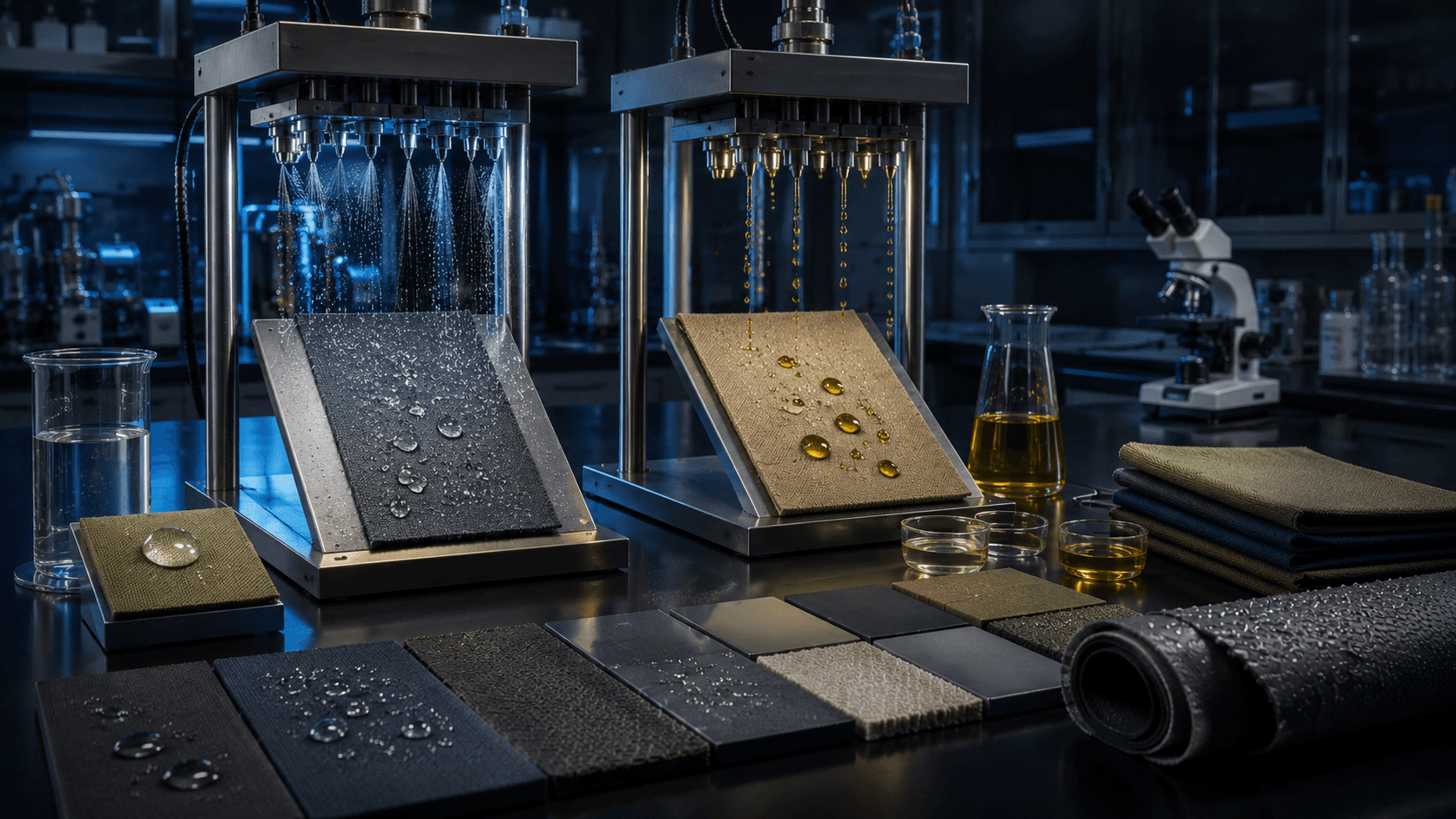
Few chemical categories have faced as much regulatory scrutiny as PFAS.
Per- and polyfluoroalkyl substances became indispensable across industries because of their unique combination of properties: water repellency, oil resistance, chemical stability and heat resistance. These characteristics made PFAS essential in everything from food packaging and outdoor apparel to industrial processing and firefighting foams.
Today, however, regulatory pressure is accelerating globally. Governments are moving toward tighter restrictions, while manufacturers and brand owners are actively reformulating products to reduce or eliminate PFAS content.
The challenge is straightforward: replacing PFAS is easy on paper. Replacing PFAS performance is much harder.
Why PFAS Became So Widely Used
PFAS chemistry achieved widespread adoption because few materials could match its performance profile.
PFAS-based materials provide:
Water repellency.
Oil repellency.
Chemical resistance.
Thermal stability.
Surface protection.
This combination allowed manufacturers to create products that remained functional under demanding operating conditions.
The same characteristics that made PFAS valuable commercially are also the reason regulators have become concerned about environmental persistence.
Why the Transition Is So Difficult
The PFAS replacement challenge is fundamentally a materials science problem.
Many alternative chemistries can replicate one or two PFAS properties, but few can replicate all of them simultaneously.
Manufacturers often face trade-offs involving:
Performance.
Cost.
Durability.
Regulatory compliance.
Processing requirements.
As a result, the market is evolving differently across each application segment.
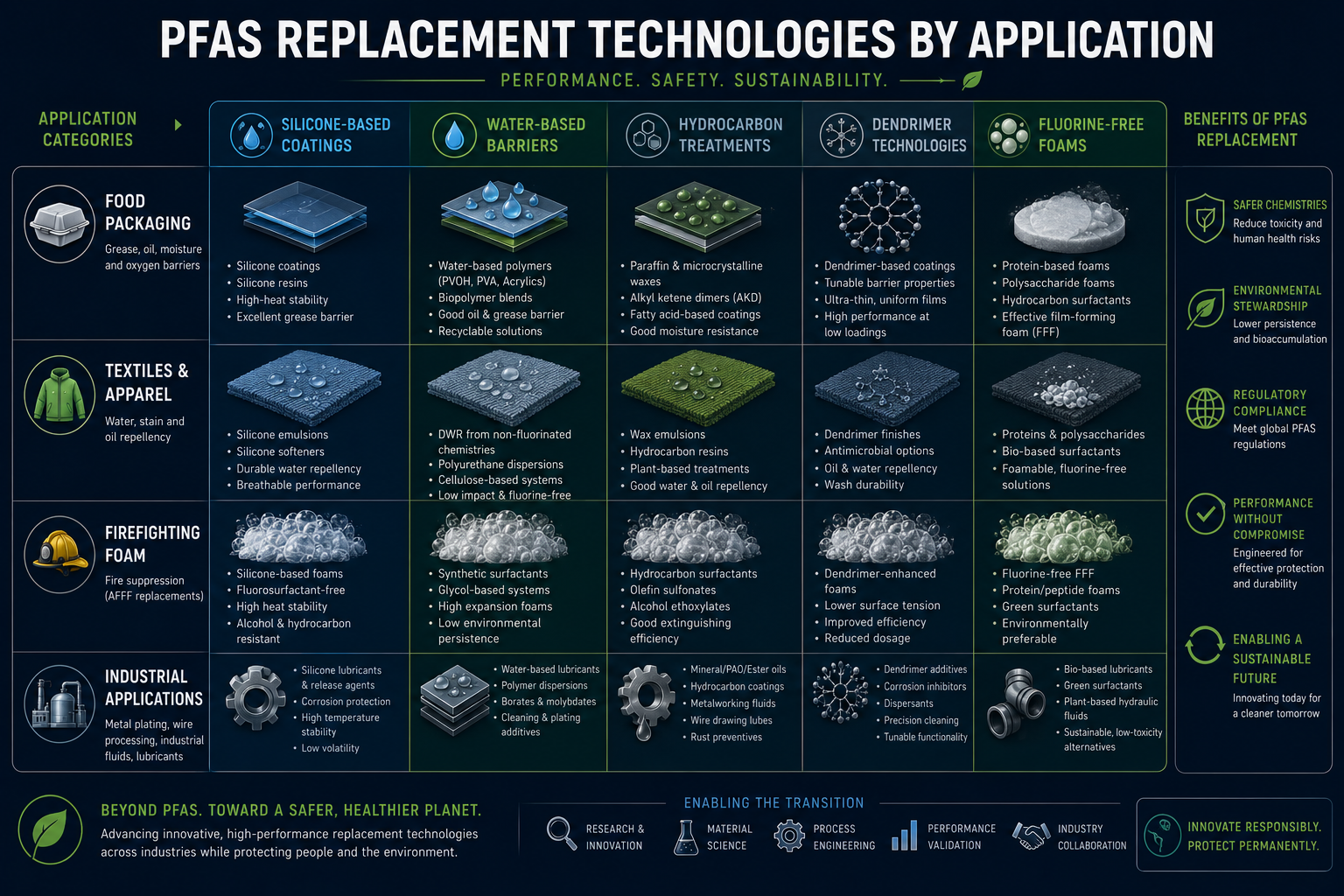
Food Packaging Is Moving Toward Barrier Coatings
Food packaging represents one of the fastest-moving PFAS replacement markets.
Historically, PFAS provided grease and oil resistance for:
Fast-food wrappers.
Paper containers.
Bakery packaging.
Disposable food service products.
Replacement technologies gaining traction include:
Water-based barrier coatings.
Bio-based coatings.
Specialty polymer dispersions.
Mineral-based barrier systems.
These technologies perform reasonably well in many food-contact applications because the performance requirements are less demanding than in industrial environments.
As regulations tighten, adoption is accelerating.
Textile Manufacturers Are Embracing Fluorine-Free Solutions
The textile industry has become one of the largest testing grounds for PFAS alternatives.
Outdoor apparel manufacturers increasingly use:
Silicone-based repellents.
Hydrocarbon-based finishes.
Wax-based technologies.
Dendrimer-based treatments.
These solutions often provide effective water repellency but may not fully replicate the oil resistance historically delivered by fluorinated treatments.
For many consumer brands, however, improved sustainability credentials outweigh modest performance reductions.
Firefighting Foam Remains One of the Toughest Challenges
Among all PFAS applications, firefighting foams remain one of the most technically demanding.
Historically, aqueous film-forming foams (AFFF) relied on fluorinated chemistry to rapidly suppress hydrocarbon fuel fires.
Replacement technologies include:
Fluorine-free foams (F3).
Protein-based systems.
Synthetic surfactant blends.
Progress has been substantial, but performance comparisons continue to be closely evaluated by:
Airports.
Military organizations.
Petrochemical facilities.
Industrial fire response teams.
This remains one of the most active areas of innovation within the PFAS transition.
Industrial Applications Face the Largest Performance Gap
Industrial markets often present the greatest challenge.
Applications include:
Semiconductor manufacturing.
High-performance coatings.
Chemical processing.
Electronics production.
Specialty lubricants.
These environments frequently require combinations of:
Extreme temperature resistance.
Chemical inertness.
Long-term durability.
Precision performance.
In many cases, no direct replacement currently matches all PFAS characteristics simultaneously.
As a result, industrial users are often pursuing application-specific solutions rather than universal substitutes.
Silicone Chemistry Is Emerging as a Major Winner
One of the biggest beneficiaries of the PFAS transition is silicone chemistry.
Silicone-based materials offer:
Water repellency.
Thermal stability.
Good environmental profiles.
Broad formulation flexibility.
While silicones do not replicate every PFAS function, they have become a leading alternative in several markets.
This trend is creating opportunities for suppliers specializing in silicone fluids, emulsions and specialty additives.
The Opportunity for Specialty Chemical Suppliers
The PFAS transition is not simply a regulatory challenge.
It is also creating a significant market opportunity.
Suppliers capable of delivering effective alternatives may benefit from:
Reformulation projects.
New product development.
Regulatory-driven demand.
Premium specialty pricing.
Long-term customer relationships.
Unlike commodity chemicals, performance often matters more than price in these applications.
This creates favorable conditions for innovation-focused specialty chemical producers.
Who Faces the Greatest Risk?
Not every market participant benefits equally.
Potentially exposed groups include:
Legacy PFAS manufacturers.
Suppliers concentrated in restricted applications.
Companies lacking replacement technologies.
Producers dependent on shrinking end markets.
As regulations expand, these businesses may face increasing pressure to adapt or diversify.
What Buyers Should Watch Through 2030
Procurement teams and product developers should monitor:
New PFAS regulations.
Fluorine-free technology adoption.
Performance benchmarking results.
Customer sustainability requirements.
Specialty silicone demand.
Emerging barrier coating technologies.
The most successful transitions will likely occur where alternatives can provide acceptable performance without significantly increasing total system costs.
The Bottom Line
The race to replace PFAS is one of the largest specialty chemical reformulation efforts in modern industrial history. While no universal substitute has emerged, meaningful progress is occurring across packaging, textiles, firefighting foams and selected industrial applications.
Silicone-based materials, fluorine-free surfactants, barrier coatings and specialty polymer technologies are all gaining market share as regulatory pressure accelerates. Yet significant performance gaps remain, particularly in demanding industrial environments where PFAS properties are difficult to replicate.
For suppliers, the transition creates both risk and opportunity. For buyers, the challenge is balancing compliance, performance and cost in a rapidly evolving regulatory landscape. The companies that successfully navigate this shift will help define the next generation of specialty materials.
Interested in fluorine-free specialty chemicals, sustainable coatings or next-generation performance materials? Explore verified suppliers and emerging market opportunities on our platform today.
Fumed Silica CAS: 7631-86-9