Heparin Biosynthesis Breakthrough: Enzyme-Only Production Could Permanently Change API Sourcing
Introduction
A new breakthrough in heparin biosynthesis may reshape the future of pharmaceutical active ingredient (API) sourcing. Researchers and industry experts are exploring enzyme-only production methods that could reduce dependence on traditional animal-based supply chains and create a more stable, scalable, and transparent manufacturing process.
As pharmaceutical companies continue to focus on supply security and quality control, this innovation could become one of the most important developments in pharmaceutical manufacturing.
Understanding Heparin and Its Importance
Heparin is a widely used anticoagulant (blood thinner) that helps prevent and treat blood clots. It plays a critical role in hospitals and healthcare systems worldwide.
Common applications include:
Surgical procedures
Kidney dialysis
Treatment of blood clotting conditions
Intensive care treatment
Medical device and catheter procedures
Because of its medical importance, maintaining reliable production and supply is essential.
The Challenge with Traditional Heparin Production
For many years, most commercial heparin production has depended on animal-derived raw materials, particularly intestinal tissue collected during livestock processing.
This approach creates several challenges:
Supply Concentration
Production can become dependent on limited geographic regions and agricultural conditions.
Quality and Traceability Risks
Managing biological raw materials creates additional monitoring and consistency requirements.
Supply Chain Vulnerability
Disease outbreaks, trade restrictions, and processing disruptions can affect global availability.
Market Volatility
Changes in raw material access can influence pricing and procurement decisions.
These challenges have encouraged the industry to search for alternative production pathways.
What Enzyme-Only Production Means
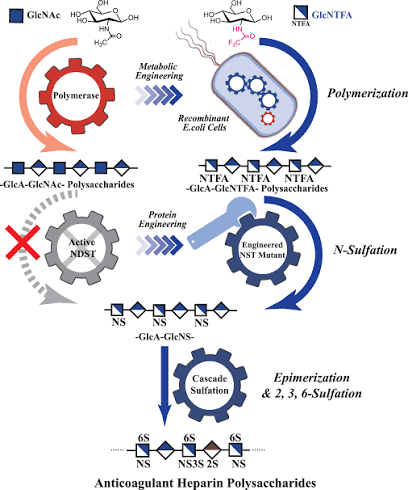
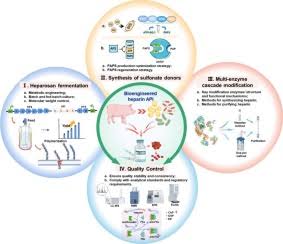
Enzyme-only biosynthesis uses controlled biological reactions to build heparin molecules without relying on traditional animal extraction.
Instead of extracting the compound directly from animal tissues, enzymes guide chemical transformations step by step to produce a targeted pharmaceutical ingredient.
Potential advantages include:
Reduced dependence on animal supply chains
Improved production consistency
Greater process control
Enhanced traceability
Easier scaling for future demand
This approach may create a more modern and predictable manufacturing environment.
Impact on API Sourcing
If commercialized successfully, enzyme-based production could permanently change how pharmaceutical companies source heparin APIs.
Possible industry effects include:
More Diverse Supply Networks
Manufacturers may expand production beyond traditional regions.
Improved Supply Resilience
Companies could reduce exposure to agricultural and geopolitical disruptions.
Better Procurement Planning
Long-term contracts may become easier to structure around controlled manufacturing capacity.
Increased Investment in Biomanufacturing
The success of enzyme-based heparin could encourage similar innovation across other complex pharmaceutical ingredients.
Challenges Before Large-Scale Adoption
Despite the promise, several hurdles remain:
Regulatory approval requirements
Commercial-scale manufacturing validation
Cost competitiveness
Process optimization
Global acceptance across healthcare systems
Industry adoption will likely happen gradually rather than overnight.
Conclusion
The emergence of enzyme-only heparin biosynthesis represents more than a scientific achievement—it signals a possible shift in how pharmaceutical APIs are produced and sourced. By reducing dependence on traditional animal-based supply chains, the industry could move toward a future defined by greater resilience, transparency, and manufacturing precision.
For pharmaceutical procurement leaders and manufacturers, this breakthrough may mark the beginning of a new era in API supply strategy.