
Related Insights

Ranking the Conflict's Reach: Impact on Global Chemical Supply Chains
The current escalation has directly touched Iran, the US, Kuwait, the UAE, Oman, Jordan, Saudi Arabia and Yemen. Chemical buyers must rank this expanded footprint against past crises to adjust procurement strategies.

Electronics Materials Makers Gear Up for a Chip Demand Boom
Global chip demand is soaring, prompting electronics materials makers to ramp up production, secure key raw materials, and invest in advanced fabrication. These moves aim to support automotive, AI, and 5G markets and stabilize supply chains.
Acetic Acid and Ethyl Acetate Tick Up: Why July's Price Increases Matter for Petrochemical Buyers
Modest price increases for acetic acid and ethyl acetate in early July 2026 may signal changing market sentiment in China's petrochemical sector. Procurement teams should monitor these movements closely, as small upstream price adjustments often precede broader changes across downstream chemical markets.

Polyethylene: Quantifying the US Ethane Advantage and Its Practical Limits for Global Buyers
US polyethylene continues to benefit from a structural ethane feedstock advantage, but delivered cost tells a more complex story. This analysis examines freight, regional supply shifts and sourcing strategies that procurement teams should evaluate before placing Q3 and Q4 purchase orders.
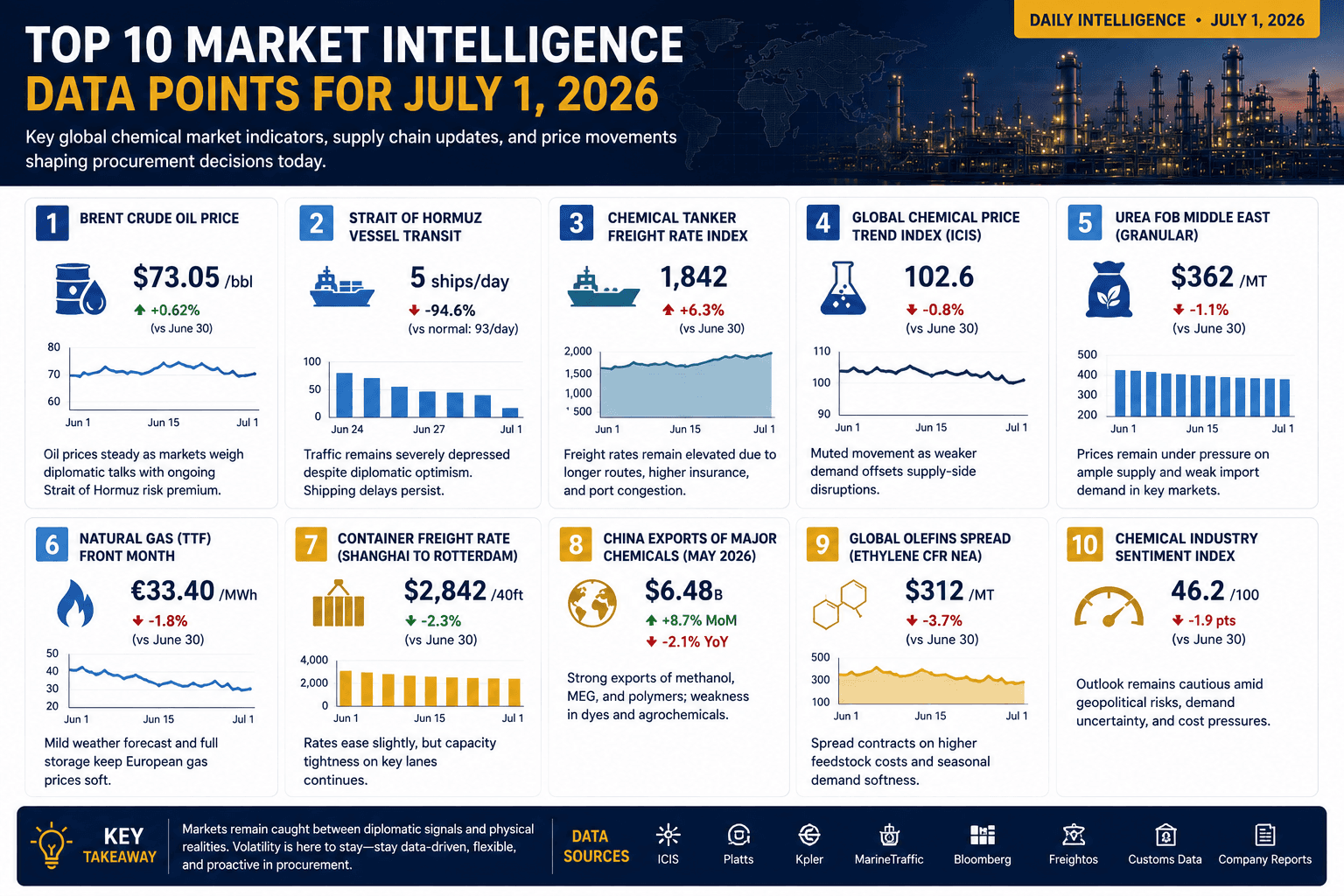
Top 10 Market Intelligence Data Points for July 1, 2026
July 1 begins H2 2026 with conflicting market signals for chemical procurement professionals. While oil prices remain stable and diplomacy improves, shipping disruption, insurance risk, new regulations, and supply chain bottlenecks continue shaping one of the most complex operating environments the chemical industry has faced all year.
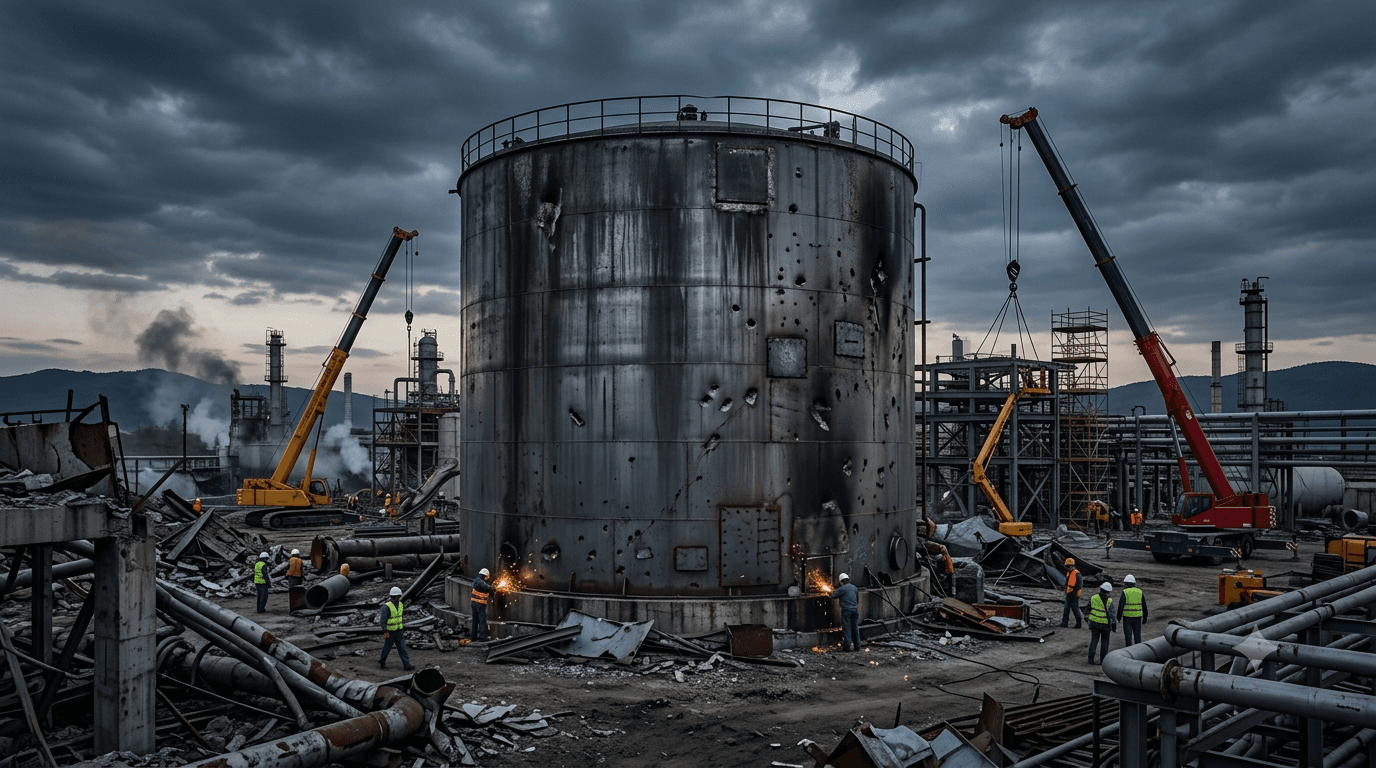
Iran’s Petrochemical Sector After the Hormuz War: Global Methanol and Fertilizer Markets Face a Multi-Year Supply Gap
Iran’s petrochemical industry emerged as the largest industrial casualty of the Hormuz War, with major production hubs reportedly suffering catastrophic damage. The resulting supply gap is reshaping methanol, fertilizer and polymer markets while creating one of the largest reconstruction opportunities in the global chemical sector.
Don't miss out on our updates! Subscribe to our newsletter now
We're committed to your privacy. Tradeasia uses the information you provide to us to contact you about our relevant content, products, and services. For more information, check out our privacy policy.